


When I was a kid, I had a bit of a Lego obsession.
Well, it wasn’t entirely my fault. My dad’s an engineer and Lego was the one toy he saw as “productive”. And that meant about 70% of my toys were Lego sets. I know that sounds like a luxury, but Lego was cheaper back then before the collectors and “brick masters” came around.
If you don’t know, a Lego set is a box of Lego bricks that comes with some instructions. My favourite was the X-Wing Starfighter from Star Wars. You can still find it on a shelf some where in my dad’s place.
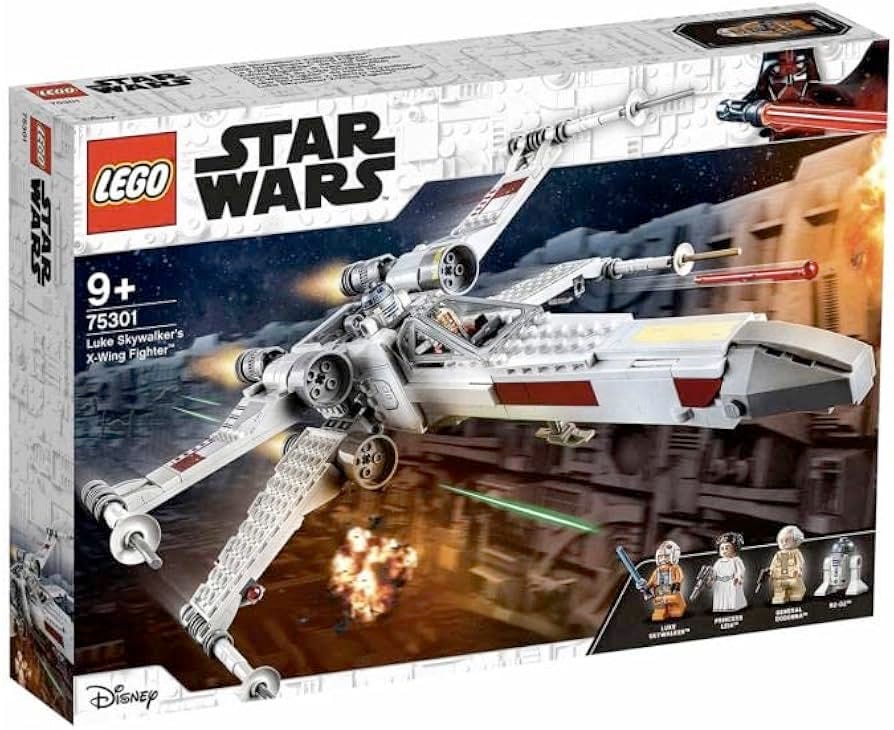
In fact, it was the only figure I ever displayed.
While most kids would build and line all their figures up on a shelf, mine always ended up in pieces in a bucket. It was a big bucket too. Kind of like the ones you can find at Lego stores now.
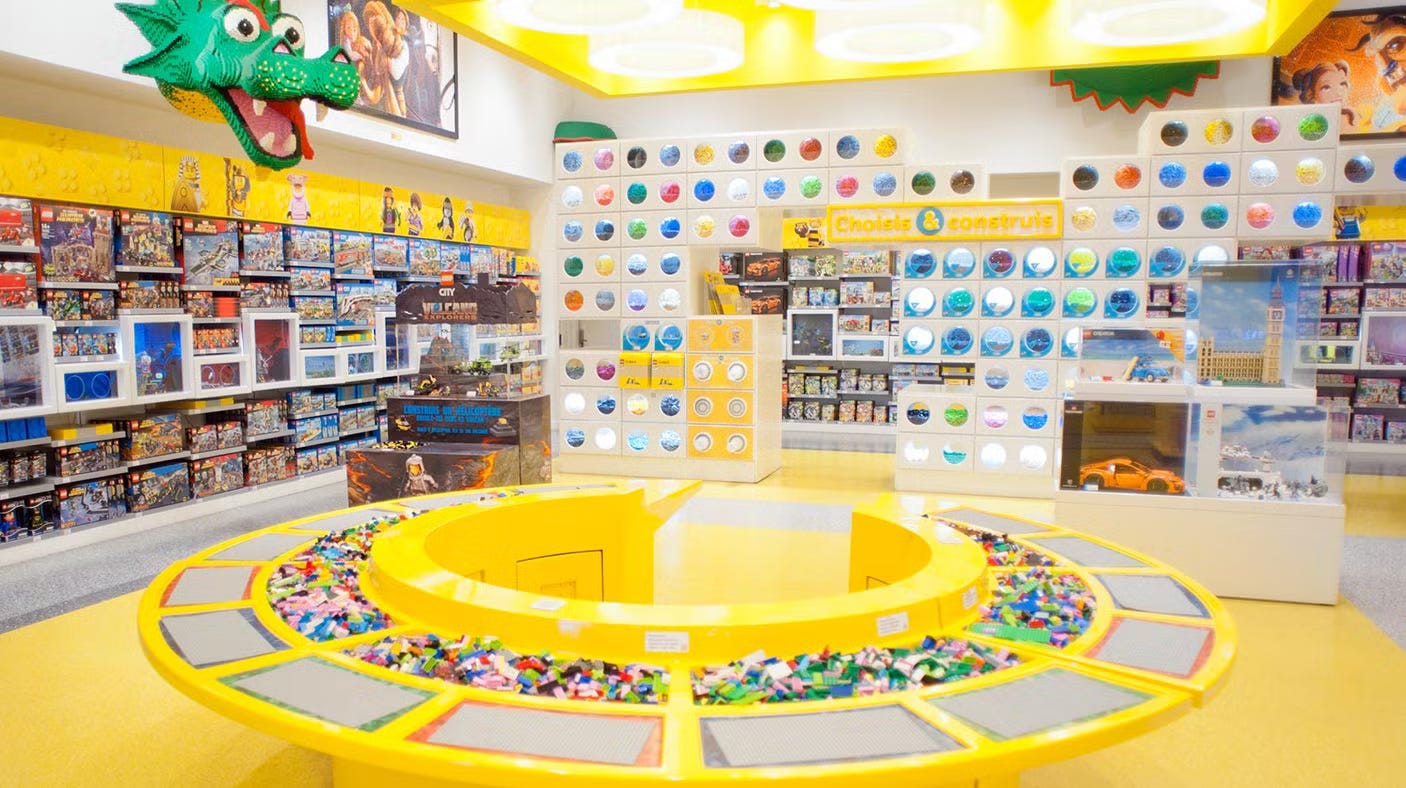
Except I was 12, so it wasn’t organized. It was just a big tub full of different Lego pieces from different sets.
I never kept the figures because I wasn’t good at following the instructions from a set. It all felt so mundane. Follow step one, then step two, then step three, and you get the thing on the box. There was no room to play. No room to be creative. Or maybe I just have a problem with a paper telling me what to do.
So, for every Lego set I got, I’d follow all the steps until I got bored. I’d would then break things apart and rebuild them out of curiosity. I’d put and break pieces at random, just to see what I could build. Sometimes I’d make something I was genuinely proud of. But other times it was just a pile of bricks stuck together.
But whether it was good or bad, what I’d then do is throw it against the floor and start over. The fun was in the exploration. In rearranging the blocks, not getting the final figure. Well, except for that Star-fighter.
Fast forward to today, I am wondering if I am spending too much time following the instructions again. That, things are looking mundane.
Adulthood pulls you back toward the instructions
As we grow up, we may play with Lego less, but more “figures” actually enter our lives. Money, time, delivering value. These may not be Lego, but they are critical to our well being. We starting feeling the pressure to earn more, to deliver more, to be more efficient. So we follow “instructions” because that’s the surest way to get to the “figure” at the end. I find myself wanting to skip the journey entirely and just get there.
If I gave you the exact steps to take to earn $1M in a year, who wouldn’t take ? Well, maybe billionaires but that’s besides the point.
Computational design is actually full of this.
Instead of taking time to explore Python, you open Excel. You know it well and it solves the problem fast enough, so you can go home early. Instead of learning Grasshopper, you cobble together a few Excel sheets that do the “same” thing. After all, you can’t spend too much time because you have to meet a budget.
And there’s nothing wrong with that. We all have goals to hit. If we only explored, nothing would ever get done.
But always following the “instructions” has a cost that’s hard to see. Yes, you may solve your problem now, but you learn nothing new. And you do nothing to hedge against an ever evolving world.
And it’s not like you actively decided not to learn anything new, you just became too busy. The projects kept coming, your method kept working, and there was no time left to try anything new.
I feel this pressure constantly. Especially with AI moving so fast now. There always seems to be something new to explore and I just don’t have the time. Some days, I wonder if I am going to get left behind.
But exploration is a gamble
The easy version of this argument is “follow curiosity and good things will happen.” But that isn’t true. Trying new things doesn’t always work out. Sometimes it leads nowhere.
When you’re judged on profit margins and speed, learning something new on a live project is a gamble. You might take half as long or.... you might take three times as long. And to make things worse, the client doesn’t care that you’re growing, they care that you deliver what you promised.
So, how do you protect space for exploration when everything around you is optimizing against it?
Tiny Experiments to hedge against the future
Anne Laure coins in her book “Tiny Experiments“ that we should be more experimental with our lives. Not by taking huge risks but by trying our new things when there’s relatively low-risk and to do it frequently.
The idea is to keep doing what you’re doing, but every so often, introduce something new. Something untested that you can learn from.
What I do is stupidly simple. But it works.
I keep a list of new things I want to try.
For me, that could be a new way of writing. Or a new AI skill. Or a programming pattern I haven’t used before.
It’s a simple list. And every time I’m doing a low-risk task or when I have a bit of breathing room, I look at that list and pick something out. If it works, great. If it doesn’t, I either keep trying until it does, or I revert to the old way.
It does mean you have to double up on work sometimes but at least it’s low stakes. It’s when you can afford the setback.
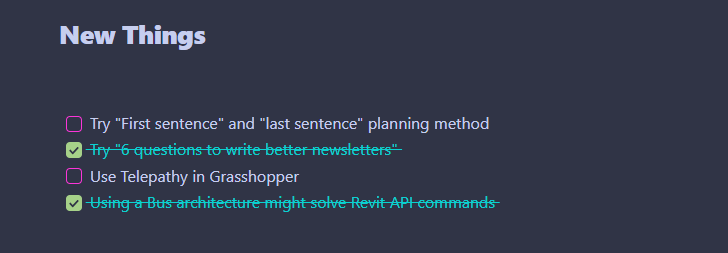
If I look at the list and realize I haven’t tried anything new in a while, that’s a signal that I am too focused on my outputs. I am not exploring enough. And I need to remind myself to try something new again.
After doing this for awhile, I found that this list became my dumping ground for every new “hack” or “framework” that I find out there.
Final Thoughts
Following your curiosity and exploring doesn’t always pay off. Sometimes you spend time on something that leads nowhere. But instead of thinking like you’ve wasted time, I like to think of it as the fee for exploration. Not all routes lead to something and that’s okay.
But not exploring has a cost that’s harder to see in the moment. You stop learning. You stop noticing what else is possible. And then one day, the world has moved on and you’re still holding the same tools you had five years ago.
So, the idea here is to make small bets, frequently and whens takes are low. It’s to do enough exploring, so that we are not left behind.
That’s why I keep this list and check in on myself every so often. It’s to remind myself that yes, the “Lego figure” at the end is important but so is the way to get there.
Want to learn where to apply computational design?
Subscribe to CodedShapes and I’ll send you my free guide on how to actually do that