


I spent my first week at my first real job watching YouTube tutorials on Grasshopper. My manager, who I saw as the expert in the tool, sent me the link and told me to “learn everything you can, we have a project for you next week”.
So, notepad in hand, I started the first video.
By lunch time on day two, I was bored. I mean how could watching a course on YouTube be a job? I’d heard of the boredom that is corporate training before, but I didn’t expect to be this bored.
By the end of the week, I had watched enough tutorials that I could show you all the buttons on Grasshopper and what each of them do. I could even explain the difference between a graft and a flatten. I must have studied everything there was about Grasshopper.
Then, Monday came. And true to his word, my manager gave me a project to work on.
The task was to model a spiral staircase with the height and width being the most important parameters. The client had an empty space on the floor and wanted to experiment with different dimensions of the stairs.
After a week of training, it was time to put all of it to work. Surely all those lessons meant I could accomplish this simple task.
Well, no. I had no idea where to start. Or what I was even doing. I put some components down, made some parameters, but my model didn’t look anything like a stair. How do you even put a spiral curve in ? How much does it curve ? Is it a circle ?
After three days of wandering, my manager came by my desk to check on me. Presumably because he could smell the stress emanating from me.
When he saw my script, he didn’t say anything. He just pulled over a chair and started telling me what to do. He showed me what components to use, how to think about the data, and what kind of pattern to follow. He gave me direction and context.
It was embarrassing but oof it was needed. After that, it took one more day and I got the job done. It was still a crappy script but at least it worked.
It took me a few more projects (think 1-2 years) before I finally got the hang of Grasshopper. And after speaking with a few others, we all had similar stories of how we all learnt the tool. I spent a week “learning” Grasshopper. All it’s buttons. All it’s components. But, I couldn’t actually solve any real problems.
The problem with most Grasshopper courses
They teach you all the features, without ever giving you the problem-solving experience that you actually need. The exercises are more like templates you fill in and all those buttons are more like trivia.
I’m not against Grasshopper courses. I think some of them are genuinely well-made. But most of them share the same fundamental problem of teaching you the features first. They cover data trees in depth before you’ve even made your first script. I mean without knowing why data trees are useful, why do you care about what they are? I certainly wouldn’t care. If you can’t tell, I am not a fan of trivia.
The courses aren’t wrong about the content. You will need to know how to manipulate a data-tree eventually. They just get the order wrong. Teaching someone data trees before they’ve ever built something useful is like teaching someone the exact mechanics of a car engine before they learn to drive. Sure, you need to know how an engine works at some point, but it’s more useful to learn how to drive first.
I am all for structured learning. But structure without context is just a list of things to memorize. And I don’t know about you, but I hate memorizing something without a good reason.
How I’d learn Grasshopper if I were starting today
First, I’d would sign up to a few courses. I would pick one and learn just enough to be somewhat proficient. Understand the interface, know how to wire components together, get comfortable with some complexity. And then start finding problems to solve.
The more problems I can find, the better. Because solving them is what actually teaches you Grasshopper. I didn’t learn data trees for the sake of it, I learnt them because my script didn’t work without them.
But it’s gonna suck. Because you’re gonna feel lost all the time. What I’d do is whenever I am stuck on something, I refer back to the individual lessons of those courses. Basically cherry picking the ones relevant to what I was solving at the time.
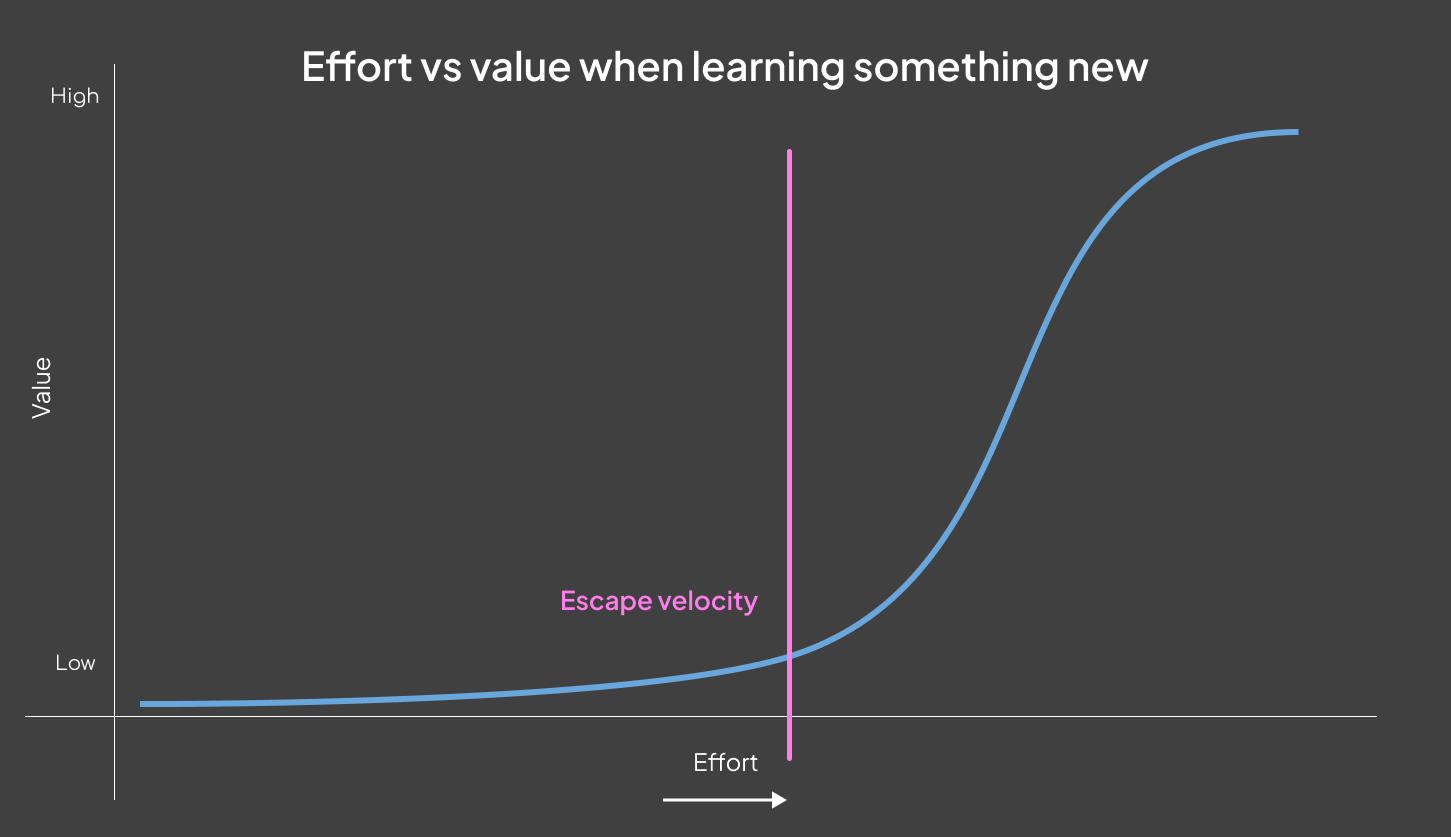
And there will be problems you can’t solve. But slowly, through trying, failing and trying some more, things will get easier. And once you reach escape velocity, learning new things stops being the hard part.
But this is a much harder path
Taking a course means being spoon-fed what to do next. It means outsourcing most of the planning and thinking to someone else. It’s easier but it’s not as effective in actually teaching you what you need to know.
It also takes some courage to take learning into your own hands. That initial phase of learning when you aren’t providing much value is a really hard. Building your first script is uncomfortable. I felt so lost trying to create that first script.
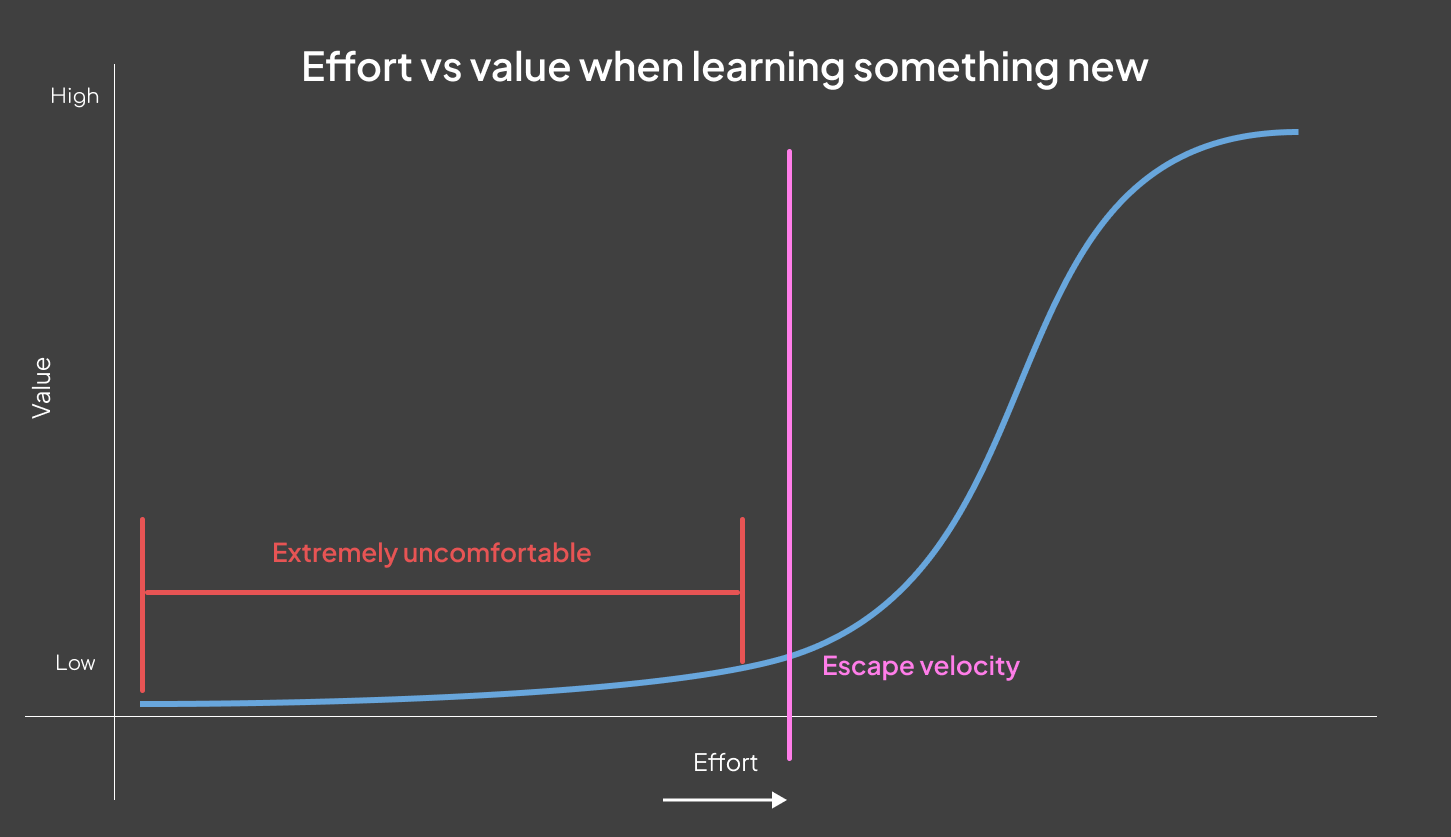
You will mess up. You will feel lost. Your first few scripts will be bad. And it will take you at least four times longer than if you’d just done the task manually.
But there’s no better teacher than discomfort. It’s the only path where what you learn actually sticks with you for the long term.
But how do I learn just enough?
Okay, so if taking tutorials isn’t the answer, then what is?
The trick is knowing just enough Grasshopper to start solving problems on your own. This is the idea of reaching escape velocity.
You don’t need to master every feature, you just need enough so that opening Grasshopper doesn’t feel overwhelming. Enough to understand the interface, connect a few components, and start dragging things around with some idea of what you’re doing.
You could cherry-pick topics from existing courses. Don’t watch every hour of the 40-hour masterclasses and just learn enough to get started. That’s what I sort of did in the end. I “took” a few more courses to help me with deeper parts. It works, but it’s hard to know what “enough” actually is.
That’s why I built my own “Primer in Grasshopper” to help people learn just enough Grasshopper to take learning into their own hands. I kept telling people “just learn the basics and go solve problems” but there aren’t a lot of good resources to do that.
So next week, I’m releasing a Primer in Grasshopper. It’s 6 lessons, designed to give you enough to take your learning into your own hands. It’s made to help you reach escape velocity quicker.
So if you’ve been on the fence about learning Grasshopper, this course might just be what you need. And if you’re a paid member, you’ll get access as part of your membership.
Alright, if this sounds like something valuable, the course is now available to paid members of CodedShapes :

Want to learn where to apply computational design?
Subscribe to CodedShapes and I’ll send you my free guide on how to actually do that